Saturday, December 05, 2009

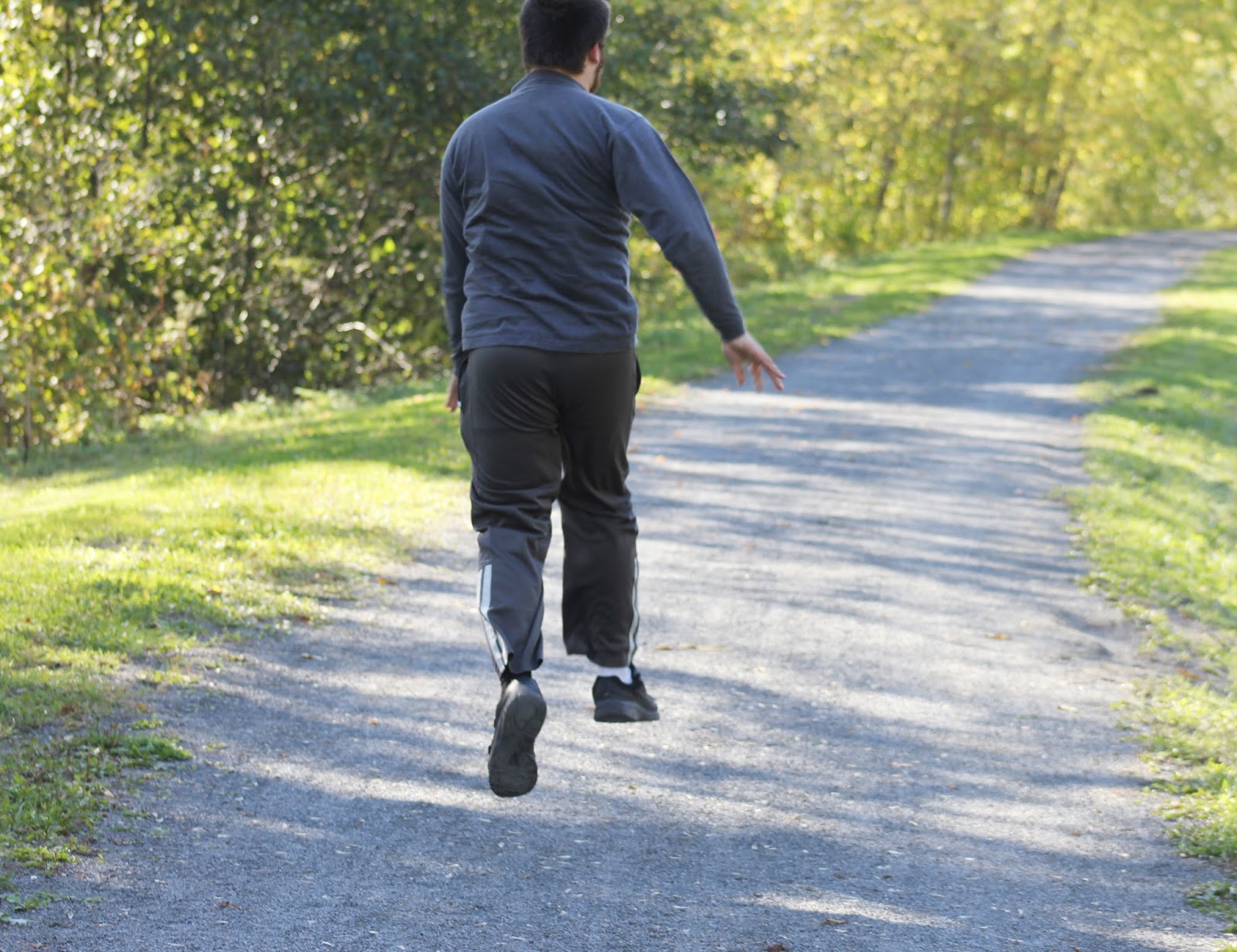
Reflections on the River, December 4 2009


Bookmark and Share

Sphere: Related Content

Thursday, December 03, 2009

Questionable Autism Epidemic Commentary by Dr.Maria Gieron-Korthals

"Maria, your article is irresponsible. How dare you state an opinion as fact? Your arguments on the reason for increased rates of autism are speculative at best. "

The above comment was posted in response to Dr. Maria Gieron-Korthals article in the Tampa Bay Tribune "Despite rising numbers, autism is not an epidemic"

The comment author, "pithetake", is correct. Dr. Maria Gieron-Korthals does present as fact her opinion that there is no real increase in rates of autism:

"A startling jump in the number of reported cases of autism – recent government-funded studies state that the disorder may affect one out of every 100 children– might lead you to the think there's an autism epidemic. Well, the good news is there is no epidemic. So why are we seeing such high numbers?

There are two main reasons. First, the definition of autism has broadened, which would include more children and, therefore, increase the total number. Second, there is a greater awareness of autism, so more parents are going to the doctor sooner, and doctors and other professionals are making the diagnoses earlier"

To my knowledge no one disputes that a substantial increase in autism diagnosis occurred because of the broadening of the definition of autism in the early 1990's (1993-4). But no amount of creative, wishful, thinking can credibly explain how that definition change at that time accounts for continual and rapid expansion in the numbers of autism diagnosis 15 years later. From 1 in 500 to 1 in 250, 166, 150 and now 1 in 100. In just the last two years estimates are being raised from 1 in 150 to 1 in 100 and the good Doctor explains such an increase primarily on a diagnostic definition change 15 years ago? Baloney.

It seems reasonable to assume that, like most aspects of life in the Internet era, there is greater awareness and there is undoubtedly greater advocacy driving increased autism awareness, but there is no irrefutable and precise measure of the impact of such general factors on increased autism diagnoses. Given the startling increases as measured by the CDC more than superficial assumption is required to credibly explain why there are so many autistic children today. Saying that, in essence, we just didn't notice them, or think of them that way as recently as a couple of years ago just doesn't cut it.

In expressing her opinion Dr. Maria Gieron-Korthals ignores the study by Irva Hertz-Picciotto, Ph.D., of the UC David MIND Institute which concluded that environmental factors may be partly behind the increases in autism diagnoses. Dr. Hertz-Picciotto was featured on WebMD where she acknowledged the role of diagnostic definition changes and increased awareness in increasing autism diagnoses but also referenced the possible contributions of environmental factors:

"When you put it all together, this doesn't come close to explaining the increases in the last 10 years. The more you whittle away at this increase, the more you have to say that what is left over is real. ... Given that autism cases keep going up, and can't be fully explained by artifacts, environmental factors deserve serious consideration.

The awareness thing is very hard to quantify. But at some point, as more and more parents became aware of autism, the increase should have leveled off. Instead we see a continued increase in autism.

Time is passing and science has a lot to do to find the real causes of autism. A lot has changed in the environment over the last 10 to 15 years. And I paint with a broad brush when I say environment: These changes include things like medications people take and assisted reproduction technology as well as what is in soaps and pet shampoos and toothpaste and so forth."

Even the very cautious and conservative IACC, Interagency Autism Coordinating Committee, recognizes in in its 2009 Strategic Plan for Autism Disorder Research that environmental factors likely play a role in causing or triggering autism:

"It is imperative that resources be devoted to research commensurate with the public health need. Specifically, we need research that deepens our understanding of ASD, including the complex genetic and environmental factors that play a role in its causation; development of improved ASD diagnostic approaches and treatments ... Having sound research on the risk factors and the environmental triggers for ASD ultimately may allow us to achieve the goal of prevention: preventing the development of the disorder in some people at risk or reducing the degree of severity in those affected... As with many complex disorders, causation is generally thought to involve some forms of genetic risk interacting with some forms of non-genetic environmental exposure. The balance of genetic risk and environmental exposure likely varies across the spectrum of ASD."

Dr.Maria Gieron-Korthals's statements dismissing any real increase in autism are opinions not facts. Her opinions do not appear to be consistent with current study or informed opinions about the role of environmental factors in causing real increases in autism.


Bookmark and Share

Sphere: Related Content

Wednesday, December 02, 2009

The Joy of Conor, January - April 2009


Bookmark and Share

Sphere: Related Content

Autism Is A Blessing? Give Thanks That My Son Has A Disorder? Not A Chance

As parents of children with autism spectrum disorders we all have to learn how to come to grips with the realities of our children's autism disorders. Some do the best they can to raise their child to the best of their ability to prepare the child to live the fullest life possible. Some become fierce advocates for services, treatments, research and cures for their child and others with autism disorders. I respect most parent's approaches. One approach that I do not respect, and have never pretended to respect, is to look at my son's autism disorder as a blessing.

I have on several occasions criticized, even ridiculed, Estee Klar, author of the Joy of Autism blog, for promoting autism as a joy or blessing. Yesterday Easter Seals, an organization active in autism advocacy, re-published the views of Barbara Gaither, mother of an autistic child who, like Ms Klar, views her child's autism disorder as a blessing for which she is thankful:

"As the years passed since that initial diagnosis in 2002, I’ve grown more and more thankful for him and his diagnosis. Many would think that I’m crazy — and maybe I am a bit, but he is such a tremendous joy to me and our entire family. He has taught me not to take the little things in life for granted — and by watching him grow and learn, I have learned so very much.

It’s simply amazing. Sometimes, I wonder what life without him would be like, or even life without him being autistic and I cannot imagine it. At this point I don’t even want to. I wouldn’t change a thing about him even if I could."

Ms Gaither is entitled to her own views. Easter Seals, in a democracy, is also entitled to promote her views. Personally I find repugnant the idea of taking joy in, or giving thanks for the fact that my son has a disorder. I can not accept the idea of being thankful that your own child lacks all the abilities to function in the real world, to live a full and complete life as possible, just because it makes a parent feel better to think that way.

I love my son Conor dearly. I regularly feature picture sets of him with he and I enjoying the outdoors and the natural beauty of the city of Fredericton. I love being with him every chance I get and I can not begin to describe how much fun it is to hang out with him or what a great sense of humor he has.

Conor has an Autistic Disorder diagnosis, assessed with profound developmental delays. He has, particularly in the past bitten himself. He has punched holes in glass windows and cut his hands. I can not give thanks for a disorder which results in injury to my son.

At 13 it is clear he will never live an independent life. I have, as an active autism advocate here in New Brunswick, Canada visited institutions where some autistic adults have lived. While I respect the people in those institutions for doing the best they can for the autistic adults in their care it is not a future that I wish for my son. It is not a future, for my son, that I would celebrate as a blessing for which I should be thankful.

I want to see Conor live the fullest, happiest life possible. I want him to have the opportunity of treatment for his autism disorder. If the "it's gotta be genetic" approach to autism research ever truly loses its sway and cures are sought and found I would want Conor to receive real blessings ... treatments or cures which help him live a fuller life when I am gone.

I do not lose sight of the fact that Conor's autism is a ... disorder. One that will continue to restrict his life long after I can care for him, long after I have finished my tour of this planet.

Love my son and be thankful for every minute I am with him? Absolutely.

Give thanks that my son has a serious autism disorder? Never.


Bookmark and Share

Sphere: Related Content

Tuesday, December 01, 2009

Ontario's Brutal Autism Reality, For Autistic Children It's Not A Place to Stand and Grow

Give us a place to stand And a place to grow
And call this land Ontario.
A place to live
For you and me
With hopes as high
As the tallest tree.
Give us a land of lakes
and a land of snow
And we will build Ontario A place to stand, a place to grow
Ontari-ari-ari-o !

From western hills,
To northern shores.
To Niagara Falls,
Where the waters roar.
Give us a land of peace,
Where the free winds blow.
And we will build Ontario A place to stand, a place to grow
Ontari-ari-ari-o

Dolores Claman and Richard Morris, A Place to Stand

If they think of autism in Ontario the three anti ABA amigos, Morton Ann Gernsbacher, Michelle Dawson and Dr. Laurent Mottron. must be very, very happy. In the province where I attended high school (General Panet High School, Petawawa), and worked for several years (Ottawa, Toronto), ABA services for autistic children are in such a state that many autistic children miss out on the chance for optimum development in the preschool years. Barry Hudson, a well informed father of an autistic child active in autism advocacy, described in a recent comment to me the situation in the province which was once, but is no longer for autistic children, a place to stand and a place to grow:


"In terms of how things are for services in Ontario they have actually gotten worse since your last post about Ontario. I have seen letters newly diagnosed parents have received from the Ministry responsible for ASD therapy funding (post diagnosis) and they are being told now that funding for therapy can be 3 – 4 years, add the wait for diagnosis (usually one year) and the quickest Ontario funds therapy is 4 years (we waited just shy of 3). The reality of Ontario is that most will not see funding until 5 years. The government does not even bother to pretend to care now since they have the economic excuse, last time I had any communication with my MPP I was flatly told to not bother to make any contact on this issue – the government intends to do nothing more than what is being done now.

As you have written many times - the parents are largely left to their own and no government is serious about aiding the vulnerable. In Ontario it is very trendy for politicians to make grand statements to support helping the truly vulnerable but when delivery is needed the vulnerable are getting “all we can afford”. The recent spending scandal here for a billion dollars blown [it will likely tally to over $1.7 billion when the dust settles] on an eHealth system that did not get delivered shows me that it is more important for the pigs to be at the troth than anything else."

Forty-two years after Ontario's unofficial anthem took to the airwaves the government of Ontari-ari-ari-o is simply not helping it's autistic children to stand and grow.


Bookmark and Share

Sphere: Related Content

Monday, November 30, 2009

Stephanie Lynn Keil on Curing Autism

I most definitely want a cure for those most profoundly disabled; I want a cure for my most disabling aspects. Autism has ruined my life, like it has ruined many others: I can't lie.

And no, I don't believe the self-diagnosed have any right to speak for the most profoundly disabled or really for anyone with autism.


Stephanie Lynn Keil, Curing Autism, A Grand Illusion, November 30, 2009

Stephanie Lynn Keil is a person with an autism disorder who speaks honestly and from a very personal, non ideological perspective. Like Jonathan Mitchell and Jake Crosby she wants to be cured of her autism. Like them she will not likely be interviewed by the New Yorker, CBC, Time, Newsweek or CNN which will likely continue to feature the views of anti autism cure proponents. Fortunately the internet provides a means for Stephanie, Jonathan and Jake to advance their positions to counter, to some extent, the dangerous positions of the anti autism cure "self" advocates over whom the mainstream media fawns unrelentingly.


Bookmark and Share

Sphere: Related Content

Sunday, November 29, 2009

November 29, Unbelievable Weather! Conor and Dad Take Advantage

This has been an unusually warm November. Today the temperature is starting to drop but it is still warm for late November. With some sunshine Conor and Dad decided to go for a good hike across the bridge to downtown Fredericton and home. A great outing but near the end Conor was feeling a bit cool. We were happy to get back indoors.


Bookmark and Share

Sphere: Related Content